Workplace safety

What is Workplace Safety?
Health and safety is defined as the set of practices, regulations, and guidelines to protect individuals’ well-being, security, and welfare in various environments, particularly in their workplaces. It encompasses the prevention of accidents, injuries, and illnesses by identifying, assessing, and controlling potential hazards and risks.
The primary goal of health and safety is to create and maintain safe, healthy environments for people to work, live, and engage in daily activities, thereby reducing the risk of harm and promoting overall well-being.

What Is Health And Safety?
Health and safety is a multidisciplinary field concerned with individuals’ well-being, protection, and welfare in their work and daily environments. It involves the identification, assessment, and control of hazards and risks, as well as the development of policies and procedures to minimize accidents, injuries, and illnesses.
Health and safety cover a wide range of areas, including but not limited to:
- Workplace safety: Ensuring that employees work in safe conditions, with proper training, equipment, and protective gear. This also involves addressing ergonomic issues, managing hazardous substances, and establishing emergency response plans.
- Environmental health: Focusing on the impact of environmental factors on human health, such as air and water quality, waste management, and exposure to pollutants and chemicals.
- Occupational health: Addressing the physical, mental, and social well-being of workers, including stress management, ergonomics, and the prevention of work-related illnesses.
- Public health: Promoting the overall well-being of communities through disease prevention, health education, and the establishment of health policies and regulations.
- Product safety: Ensuring that products, equipment, and machinery are designed, manufactured, and used in a way that minimizes risks to consumers and users.
Why is health and safety at work important?
Health and safety is important because it protects your employees and any visitors to your business, such as clients or customers. Employers have a duty of care to ensure a safe working environment under the Health and Safety at Work Act 1974, but more than that, it’s good business practice to adhere to health and safety laws. Businesses that flout the law face losing staff, higher recruitment costs, lower retention rates and lower profitability.
Worse still, poor health and safety can lead to illness, injury and even death - you can be prosecuted for breaching health and safety regulations which can lead to fines, imprisonment and the loss of your business altogether.
Workplace health and safety is important for the health and wellbeing of all employees across all industries. And the last thing you want is to be the employer who loses an employee in an accident and is then charged with corporate manslaughter.
What is the Health and Safety at Work Act?
The Health and Safety at Work Act 1974 (HSWA) is the piece of legislation which enshrines the general principles of health and safety in the workplace.
It places a wide range of duties on the employer to take all measures “so far as is reasonably practicable” to prevent or reduce risk in the workplace.
The Health and Safety Executive (HSE) is responsible for enforcing the HSWA along with local authorities.
To avoid heavy fines from health and safety breaches, it's vital that HR consultants, line managers and SMEs regularly check legislation revisions and updates to ensure that they stay on track and in the HSWA's good books.
The HSWA places a wide range of duties on the employer to protect the health and safety of their:
- workers and direct employees;
- temps and casual staff;
- sub-contractors and freelancers;
- clients and partners; plus
- visitors and the general public when they’re on the business' premises.
What is a health and safety plan?

A health and safety plan is an organization’s documented plan that addresses workplace hazards and establishes safety measures and procedures. It provides detailed instructions and strategies on how to manage different aspects of health and safety.
What are the most common hazards and risks in a workplace?
Workplace hazards refer to any situation or source that has the potential to cause injuries, damage, or harm to a person in a workplace. Most common workplace hazards can fall into these six core types:
- Biological hazards
- Chemical hazards
- Physical hazards
- Safety hazards
- Ergonomic hazards
- Psychosocial hazards
Biological hazards – It is common for biological hazards to appear in a workplace so it is important to be prepared for them as they can have consequences. Biological hazards are harmful substances produced by organisms.
Some of the most typical biological hazards include:
- Bacteria and viruses
- Mold and fungi
- Harmful plants
- Stinging insects
- Contaminated waste
- Animal droppings
Chemical hazards – Refers to any chemical substances that can cause a health hazard. Based on the type of harm they cause, chemical hazards are categorized as:
- Corrosives
- Irritants
- Teratogens
- Sensitizers
- Mutagens
- Carcinogens
Common workplace chemical hazards can include:
- Acids
- Caustic substances
- Cleaning products
- Heavy metals
- Pesticides
Physical hazards – These are environmental factors that can harm employees. For example:
- Radiation
- Extreme weather
- Extreme noise
- Height
- Pressure
- Machinery and tools hazards
- Electricity
Safety hazards – These are all hazards that make workplace conditions unsafe. Sometimes, safety hazards overlap with physical hazards. Some examples of safety hazards are:
- Exposed wires
- Slippery, falling, or tripping hazards
- Machinery malfunctions
Ergonomic hazards – These are physical workplace conditions that can cause injury to the musculoskeletal system. For example:
- Poor posture
- Heavy lifting
- Improper workstation
Psychosocial hazards – These are work-related factors that can increase stress and can lead to psychological or physical harm. For example:
- High or low job demands
- Poor support
- Poor management
- Low recognition and reward
- Low role clarity
- Poor relationships
- Workplace harassment
- Traumatic events
Plan-do-check-act approach
Plan-do-check-act (PDCA) is a management approach used to continually control and improve processes. This continual improvement cycle is easier to follow, and is effective strategy in managing health and safety processes.
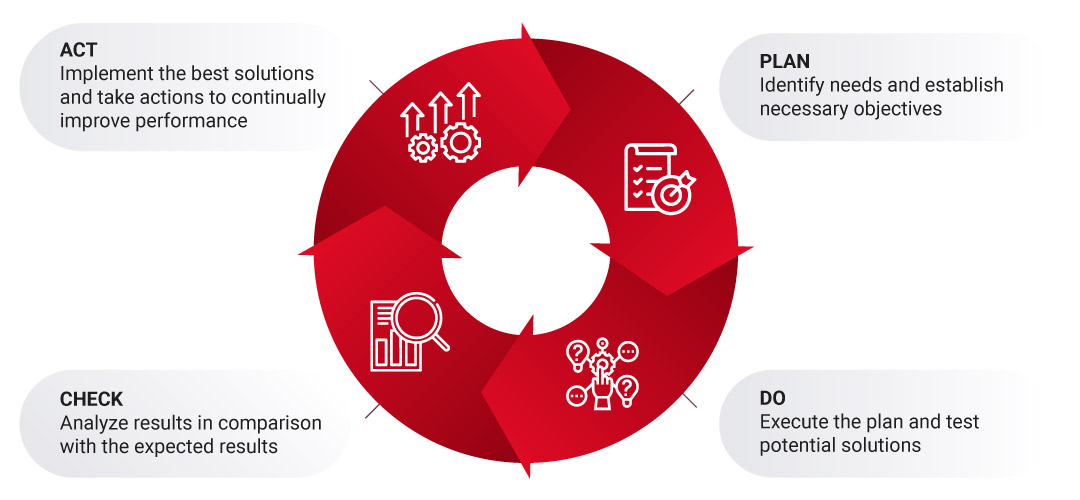
Plan
The planning phase is the first step of the PDCA cycle. During this phase, board members establish a health and safety policy and define the goals and expectations of the organization. The board should be aware of risks and they should plan how to assess and understand the main issues they are facing. This process should be evolving over time in order to address and meet its needs constantly.
Overall, during this stage, the working team will study the concerns, establish objectives and priorities, design and define roles and responsibilities, and determine how the process effectiveness will be evaluated.
Do
After the planning, the doing stage is when the action happens. The main part of the do stage is to identify the risks and find a solution to minimize or eliminate them. As planned ahead, the biggest risks should be prioritized and started with first.
Check
During this phase, performance is monitored, controlled, and assessed by using different methods defined during the planning phase. During this phase, the organization observes, collects, and analyzes data, gathers employee feedback, and also records and reports outcomes.
Moreover, they conduct regular or scheduled inspections, check the operation of workplace precautions, monitor the environment, and carry out health surveillance.
Conclusion
Occupational safety and health is an important aspect of workers’ motivation and job satisfaction, which influence productivity as well as retention. Workplace safety promotes the wellness of employees and employers alike. Better safety equates to better health. Healthier employees do tasks more efficiently, and they are happier in general. There are very few accidents in a safe working environment.
https://www.breathehr.com
https://pecb.com/


This comprehensive blog provides a detailed overview of workplace safety, health, and the importance of adhering to regulations like the Health and Safety at Work Act. It emphasizes the multifaceted nature of health and safety, covering various hazards and the Plan-Do-Check-Act approach for continual improvement. A must-read for anyone keen on fostering a safe work environment.
ReplyDeleteThis post emphasise the importance of health and safety at work place. Types of Hazards in working place are well explained. Great post
ReplyDeleteGreat blog, clearly explained. Workplace safety is not just a legal requirement; it's a fundamental commitment to the well-being of employees. HR plays a critical role in establishing and enforcing safety protocols, conducting training programs, and fostering a culture where every employee feels responsible for their own safety and that of their colleagues. A safe workplace is the cornerstone of employee satisfaction, productivity, and organizational success.
ReplyDeleteI couldn't agree more with the points raised in this insightful blog post. Workplace safety is not just a legal obligation; it's a fundamental aspect of creating a positive and productive work environment. The emphasis on regular safety training is particularly crucial. It not only keeps employees informed about potential hazards but also empowers them to take an active role in maintaining a safe workspace. In my experience, fostering a culture of safety awareness leads to increased morale and a sense of responsibility among team members.
ReplyDeleteThis article brilliantly encapsulates the critical importance of workplace safety in today's professional landscape. It meticulously explores the multifaceted aspects of ensuring a secure work environment, encompassing not only physical safety measures but also the psychological and emotional well-being of employees. The emphasis on proactive strategies, comprehensive training, and the role of a safety-oriented organizational culture is both enlightening and empowering. A timely and essential read that underscores the shared responsibility of employers and employees in cultivating workplaces where safety is paramount, ultimately contributing to enhanced productivity and overall employee well-being.
ReplyDeleteHighlighting workplace safety helps to create a more positive and productive work environment in addition to safeguarding employees from harm. Employers can minimize potential liabilities and disruptions from workplace accidents while also demonstrating their commitment to the health and welfare of their workforce.
ReplyDeleteThis insightful blog underscores the pivotal role of workplace safety. It adeptly covers the importance of a holistic approach, from physical safety to mental well-being. The emphasis on proactive strategies and regular training is key, empowering employees and nurturing a safety-conscious culture.
ReplyDeleteYou have covered the provision of a safe working environment, safe equipment, policies, and procedures in order to ensure workers' health and safety.
ReplyDeleteGreat!