
Human resource professionals are expected to meet ethical standards set out in the Code of Ethics and the Rules of Professional Conduct. These standards require ethical conduct, competent service, and good character. The Code of Ethics provides both broad general principles and some details about how those principles should be applied in practice.
Often codes of conduct take big picture ideas tied to the business’s overall mission and core values and relate them to the behavior and practices they desire from staff on a day-to-day basis.
Creating a code of conduct is a statement from leadership laying out their expectations and communicating the ethical principles they feel are most fundamental to success. Generally, it reflects the culture already present, or the culture leadership is looking to promote.
A code of conduct is closely related to a code of ethics, to the extent where the phrases are often interchangeable.
- A code of conduct offers principles defining the ethics of a business, but it also contains specific rules for employee actions and behavior.
- A code of ethics is broader, providing a set of principles that affect employee mindset and decision-making
Generally, both are combined into a single document, and an organization rarely has a different code for each.
The Human Resource Code of Conduct includes the following guidelines.
- Adhere to the highest standards of ethical and professional behavior.
- Measure the effectiveness of HR in contributing to or achieving organizational goals.
- Comply with the law.
- Work consistent with the values of the profession.
- Strive to achieve the highest levels of service, performance, and social responsibility.
A code of conduct in practice can range from big picture ideals to specific rules. For example, a code of conduct can outline how employees should behave to reflect the organization’s wider mission, but it can also define fixed regulations related to internal practices such as dress code or break policy.
A code of conduct could emphasize ethical attitudes and staff communication policies to prevent conflict or harassment while also outlining the consequences for poor behaving that violates the code.
You can think of adopting a code of conduct as the organization making a commitment to self-regulation. Leadership is putting into writing the conduct they expect from their employees and the ethical principles they want to guide them.
With a code of conduct in place, the organization has a framework to inform ethical decision-making for each and every stakeholder. While it isn’t a turn-key solution to every dilemma an employee faces, it shows staff the organization’s guiding principles and helps them make better choices in their daily activities.
A code of conduct is also a vital part of a company’s compliance and legal policies. For example, in the US, public organizations must have a code of conduct in place. Plus, from a compliance point of view, if an employee engages in illegal activity while at work, a code of conduct provides documentation showing they broke company policy.
By creating a code of conduct:
- The staff understands what rules and expectations management has. It defines how to act while at work, how to communicate both internally and externally, and helps employees be successful at the company.
- The organization has concrete company policies to help with compliance training.
- Potential customers and business partners understand the values of the organization.
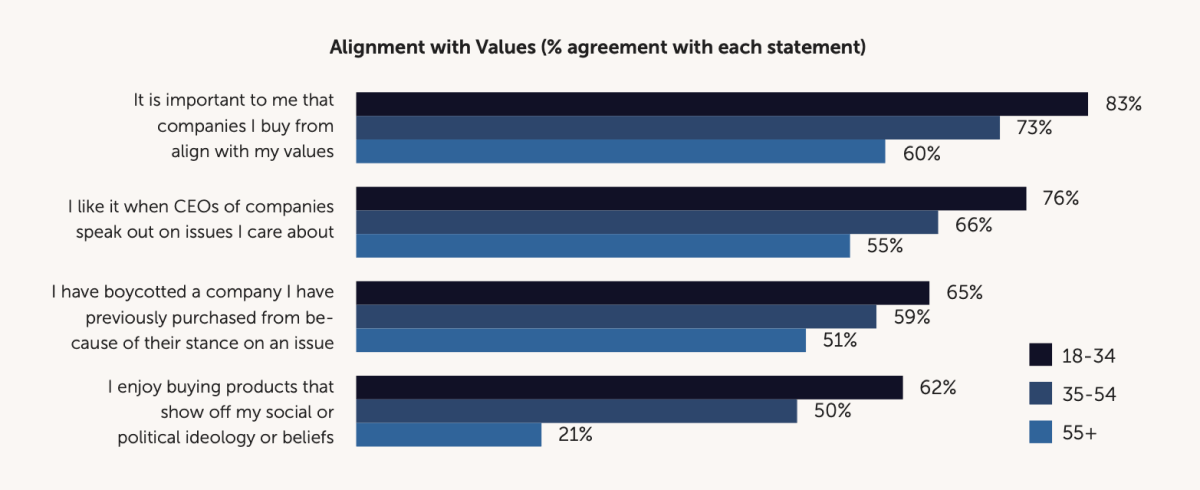
A Harvard Business Review survey shows the most significant driver of brand relationships is shared values (64%). In addition, 5WPR’s 2020 Consumer Culture Report found company values are more important for younger generations. For example, 83% aged 18-34 (the age group often described as millennials) agreed with the statement, “It is important to me that companies I buy from align with my values.”
What to include in a code of conduct
Your organization’s specific purpose for adopting a code of conduct will define the scope to aim for. Some choose to focus on only the most essential values and guidelines to not overburden employees with information they may forget. Some seek to be more comprehensive and produce documentation covering as many aspects as possible.
Your code of conduct should include information in some form regarding:
- The values your organization believes in
- Guidelines for behavior
- Day-to-day business practices
- How employees should interact with outside parties
It is also essential to define the procedures and consequences of code violations where applicable. It may be more challenging to identify a code of conduct violation when it comes to company values. However, employees should know the disciplinary processes for fixed rules (harassment, tardiness, etc.).
Finally, codes of conduct are typically prefaced with a letter from the CEO that provides a personal touch and emphasizes the leadership team’s commitment to the principles and rules it contains.
Listed below are important factors to consider for inclusion in your code of conduct. These are grouped into the four main areas described above. While covering every element detailed here may seem unrealistic, especially for new or small businesses, it is better to have something in place than react and define policies after an issue arises.
1. Company values
Details and topics related to the values the company holds itself to. This section allows the company to show the ethics and beliefs most dear to them and how they put this into action. This could include but is not limited to:
- Business ethics
- Social responsibility
- Environmental responsibility
- Employee rights
- Commitment and responsibility
- Diversity and inclusion
2. Employee behavior
Within a code of conduct, leadership must explain to all employees what is expected of them in terms of behavior and performance. This could be related to how they treat the people around them and communicate or specifics related to how they perform their role. A company could cover numerous employee behavior topics within a code of conduct. Examples include:
- Standards of professionalism
- Discrimination and sexual harassment policies
- Use of company assets
- Use of social media
- Communication rules
- Disciplinary process

3. Internal practices
In this instance, internal practices refer to defined rules related to day-to-day business practices that are easy to explain. While similar to employee behavior, it is hard to define a simple black and white definition for “Standards of professionalism.” That topic requires more explanation to convey the expectation to an employee. Whereas a company’s rules related to attendance and punctuality is a set thing that is simple to understand. Examples of the internal practices a code of conduct could contain include:
- Dress code
- Annual leave/holiday time
- Inclement weather policy
- Break policy
- Onboarding process
- Job duties
- Training guidelines
- Rules related to time off through illness/injury
- Attendance and punctuality
- Use of phone while at work
- Benefits
- Chain of command
- Legal compliance
4. External practices
Finally, a code of conduct; should define the expectations for employees when dealing with external parties. For example, this could be in relation to confidential company material or a level of courtesy and respect when dealing with customers. There are many examples of external practices a code of conduct may define, such as:
- Confidentiality
- Privacy
- Intellectual property policies
- Customer communication requirements
- Conflict of interests
What Is a Code of Conduct Violation?
Code of conduct usually refers to your behavior, hence the word “conduct.” Due to an increased emphasis on corporate social responsibility and the need to decrease employee lawsuits, more and more businesses have introduced conduct codes. These can cover behaviors that lead to sexual harassment or discrimination, damage the company’s reputation with its external stakeholders, include physical threats or intimidation, or decrease office morale.
Examples of Workplace Code Violations
Putting your hands on employees, even giving hugs or putting your arm around someone, can create a breach of a code of conduct. While these acts might seem innocent to you and might be reciprocated by a coworker, a business might want to prohibit this type of behavior because other employees might engage in inappropriate touching.
If you make sexist, homophobic or racist remarks, these are obvious violations of a workplace code of conduct. However, some jokes at the expense of other groups might be offensive enough to fellow employees to trigger a code warning. For example, if you make repeated, negative remarks about Republicans or Democrats, or make insults about Yankees or Southerners, you can get into trouble.
Spreading gossip, even if what you’re saying is true, is probably a violation of your company’s code of conduct. Don’t even repeat gossip someone else has started, even if it’s your boss, because you are still repeating and spreading the gossip.
If you want to be politically active or pursue social activism, you have the right to speak your mind on social media channels outside of the workplace. However, if you trash a particular group, even on your own time, members of that group have the right to stop patronizing your company and even call for a boycott of your company because of your behavior.
For this reason, it’s a good idea to find out what social-media use policies your company has.
Consequences of violating a code of conduct can include:
- Warning
- Loss of privileges
- Suspension
- Demotion
- Job transfers
Severe violations of a code of conduct, such as acts of violence, threats toward co-workers or managers, theft or abuse of power, can result in harsher penalties, even on a first offense. Valid claims of sexual harassment, physical threats made against others, bringing a weapon to work, destroying work property and theft are all examples of more severe conduct code violations.


This post provides a comprehensive overview of the importance of a code of conduct within organizations, emphasizing its role in establishing ethical standards and guiding employee behavior. The distinction between a code of conduct and a code of ethics is particularly insightful, shedding light on how both of them can work together to create a cohesive framework for organizational culture. This post serves as a valuable resource for both HR professionals and employees, offering insights into the creation, implementation, and enforcement of a code of conduct within the workplace
ReplyDeleteYour blog on Turnover (Employment) is a comprehensive exploration of a crucial HR metric. I appreciate the depth of insights into understanding, measuring, and managing turnover. To enhance its impact, consider incorporating real-world case studies or examples showcasing successful turnover management strategies. Your blog serves as an informative guide for HR professionals, offering valuable perspectives on mitigating turnover challenges and fostering a more stable and productive workforce.
ReplyDeleteYour post wonderfully highlights the importance of a code of conduct in shaping ethical workplace standards. Adding real-life examples to illustrate turnover management strategies could enhance its impact further. Still, your insights are valuable, offering key perspectives for a more stable and productive workforce.
ReplyDeleteVery interesting blog , lot to see deep on it.The ethical standards outlined in the code of ethics and rules of professional conduct serve as the compass guiding individuals in their professional realms. Upholding these standards is not just a mandate but a commitment to integrity, transparency, and the well-being of all stakeholders. Whether in business, healthcare, or any profession, adherence to ethical principles fosters trust, credibility, and ultimately contributes to a sustainable and responsible professional environment.
ReplyDeleteYou have covered the core facts of Values, rules, standards, and principles.
ReplyDeleteGreat.
Your blog on employment turnover is insightful and well-articulated! Your human resource management perspective offers valuable strategies for addressing this challenge. Great Work!
ReplyDelete